The ARRAKIHS telescope, scheduled for launch in 2030, is specifically designed to study the faintest traces of ancient galaxies. Norwegian researchers play a central role in the mission.
When researchers examined ribs from extinct ichthyosaurs, they were surprised by how heavy and dense they were. Perhaps the extra weight helped them reach the depths, much like divers’ lead belts.
Large parts of Northern Europe experienced extreme drought in 2018. Hydrologists at University of Oslo have searched Norwegian media for drought impact reports from 2000 to 2018 in order to better understand its consequences.
Loss and fragmentation of habitats can lead to greater distances between wild bee populations, resulting in isolation of populations. Researchers are therefore developing maps that tracks wild bees’ dispersal routes.
The consequences of volcanic eruptions can be severe. Now researchers at the University of Oslo have made a surprising discovery: magma pressure can fold solid rock in less than a single day. They found the evidence on a mountainside.
A new study presents projections for Jostedalsbreen in a future warmer climate. Scientists used an advanced computer model to simulate the glacier's melting and dynamics across various scenarios.
No, the ocean current that brings warm water along the Norwegian coast will not stop, producing a cold shock or a new ice age. Here you will learn why.
This summer, we have witnessed extensive heatwaves affecting several places in Europe. Overheating can pose significant health risks for vulnerable groups in urban areas.
Researchers have created an energy model to find different ways for Europe to be climate neutral by 2050. The good news, is that there are many ways to achieve this goal.
When glaciologist Thomas V. Schuler arrived in Svalbard in the fall of 2024, he realized the seriousness of the situation. A new Norwegian study shows that the ice melted to an extent we have never seen before.
"Tears were streaming down my face when I realized we were the first to capture it in a photograph," says researcher Elise Wright Knutsen at the University of Oslo.
The world's glaciers are melting, and this affects communities and the natural environment. Climate policy can preserve more ice mass, researchers point out.
The coastline of Southeast Greenland is uplifting more rapidly than other parts of the island. This is caused by weak rocks beneath this part of Greenland, combined with the melting of the ice sheet, according to researchers.
A cloud of dust lies between us and outer space, preventing us from looking out. Now, scientists will map this dust so we can get a clearer picture of the universe.
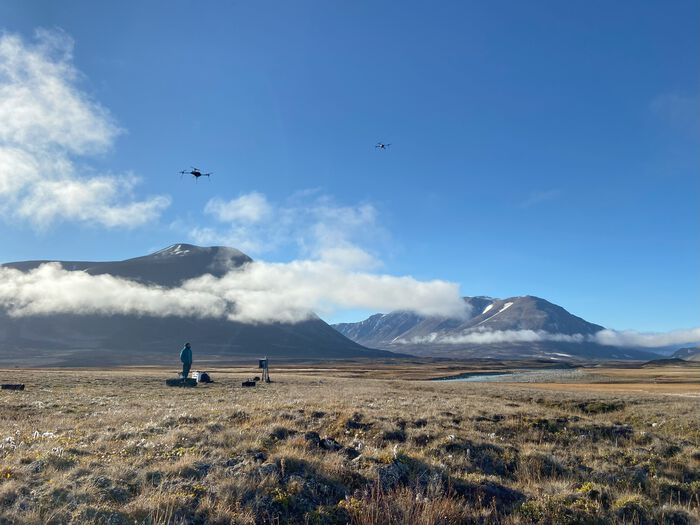
How do you map something that is both invisible and odorless? Researchers at the University of Oslo have trained drones to find the best places to measure greenhouse gases on their own.
Scientists have described a completely new organ that may play an important part in the fish’s immune system. This can have implications for future health of salmon used in farming industry and other fish.